
Usage & Routine
How often can I use NeuroVIZR? Is daily use safe?
Yes, NeuroVIZR can be used daily. Many users experience benefits with 1–2 sessions per day. If you feel overstimulated or tired, take a rest day or switch to calming sessions (e.g., Delta, Peaceful Heart).
Can I combine multiple sessions per day?
Yes. You can combine a morning activation session (e.g., Beta, Up Beat) with a calming evening session (e.g., Delta, Deep Dive). NeuroVIZR is designed for flexible, intuitive use.
Should I follow a weekly schedule?
Not necessarily, but balance matters. A common rhythm:
- Morning: Focused or energizing session
- Midday: Rebalancing session
- Evening: Calming or sleep-promoting session
Effects & Expectations
I didn’t feel anything during my first session. Is that normal?
Yes. Some people feel effects immediately (relaxation, tingling, visual imagery), others need a few sessions to notice deeper changes. Neuroplasticity unfolds over time.
Is it normal to feel emotional or tired after a session?
Yes. Some sessions stimulate emotional processing or nervous system shifts. Allow integration time. Drink water, take a walk, or journal if needed.
Can NeuroVIZR help with sleep, stress, or mood swings?
Yes. Specific sessions target these areas:
- Sleep: Delta, Deep Dive
- Stress: Peaceful Heart, Gentle Moves
- Mood: Bye Bye Blues, Heart Space
Science & Technology
What kind of light does NeuroVIZR use? Is it safe for my eyes?
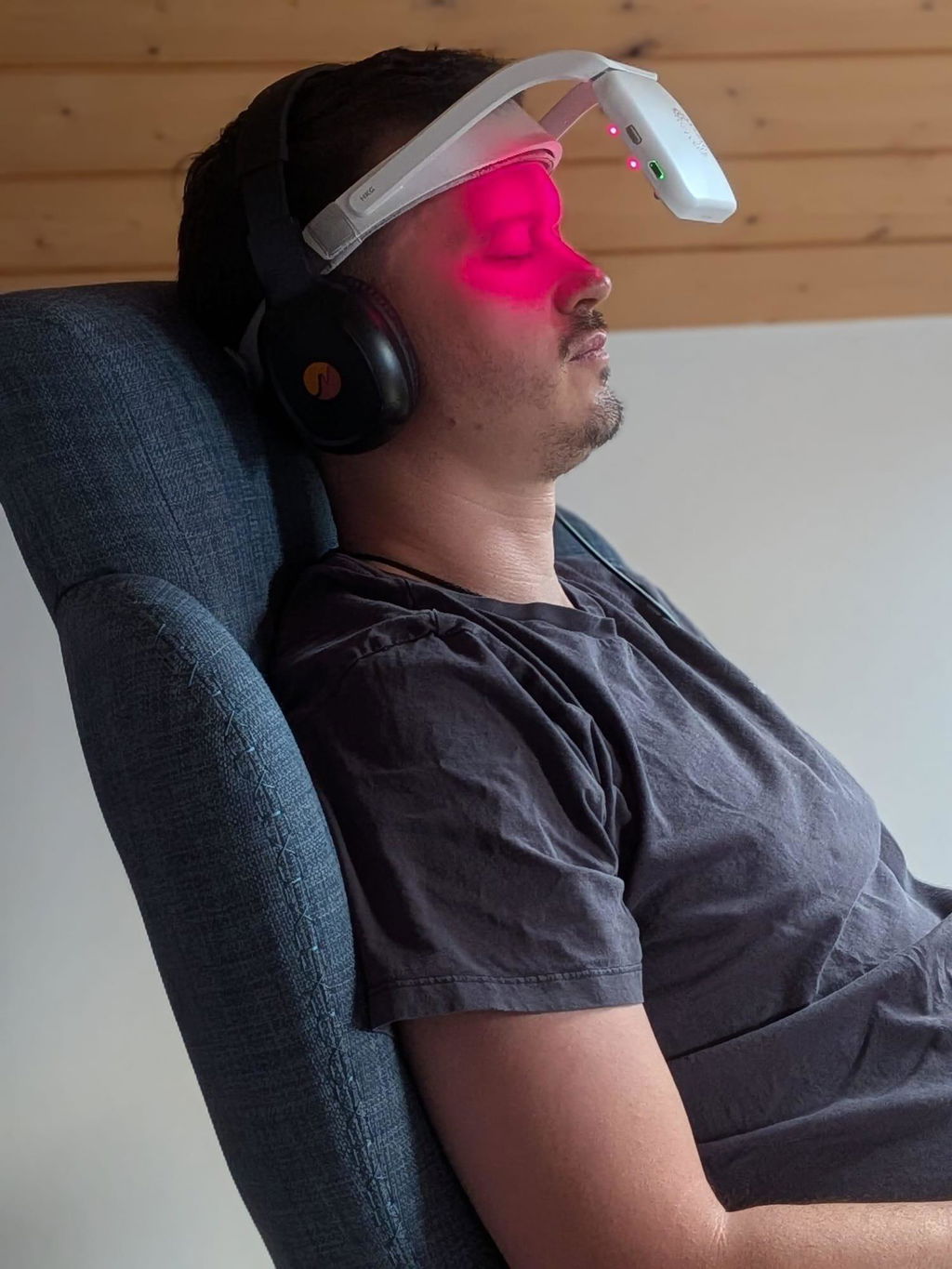
NeuroVIZR uses non-invasive flickering LEDs. Current research confirms it's safe when used as intended. Sessions are short and designed for neural stimulation, not prolonged exposure.
How does light and sound affect my brain?
Rhythmic light and sound can entrain your brainwaves to specific frequencies—promoting calm, focus, creativity, or deep rest depending on the session. This is known as brainwave entrainment.
My wearable says I'm “stressed” during sessions—why?
Wearables like Garmin measure stress based on heart rate variability (HRV). NeuroVIZR can temporarily lower HRV as your brain activates—but this is part of the positive stimulation cycle, not actual stress.
Conditions & Custom Use
Who are the sessions for?
neuroVIZR is a wellness device for people who want to wind down or gather themselves during a busy day. If your evenings are hard to switch off, the calmer sessions such as Heart Space or Dehabituate are a good place to start. If you want to settle into a task, try Beta or Focused Attention. Start with one session a day and find out which programme suits which moment. If you have health concerns, please talk to a qualified professional.
Which sessions suit a calming evening routine?
Bye Bye Blues, Heart Space, Gentle Moves and Delta are among the quietest programmes in the library. Many people build a fixed evening sequence out of two or three of them and keep it for weeks. Try a few and stay with the one that feels right.
Can children or seniors use NeuroVIZR?
Yes, with supervision and at lower light intensities. Always begin with calming sessions and assess individual responses.
Precautions
Who should NOT use NeuroVIZR?
People with:
- Epilepsy or light-induced seizures
- Recent major head trauma or brain surgery
- Extreme photosensitivity
Can NeuroVIZR replace therapy or medication?
No. It is a wellness tool to complement your healing journey. Consult a professional for medical or psychiatric conditions.