

Brain Fog from Stress: Why Your Mind Feels Cloudy and What You May Need
  • Written by Gourav Rathore

Disclaimer

This content is for informational purposes only and does not constitute medical advice. Please consult a qualified professional for ongoing or serious concerns.

You sit down to focus, but your thoughts feel slow. Words don’t come easily. You reread the same sentence again and again, wondering why your mind feels unclear even when you’re trying your best.

This experience, often called brain fog, is commonly associated with periods of prolonged stress.

It’s important to understand:
This isn’t about laziness or lack of discipline. It may simply reflect how your mind and body respond when daily pressure builds up over time.

Instead of seeing it as a problem, it can be helpful to view it as a signal—a reminder that your system may need rest, balance, and calmer rhythms.

What Happens During Stress-Related Mental Fog?

When life feels overwhelming emotionally or mentally your body naturally shifts into a more alert state.

This response can be helpful in short moments. However, when it continues for longer periods, your attention and mental clarity may feel different.

You might notice:

  • Slower thinking

  • Difficulty concentrating

  • Forgetfulness

  • Feeling mentally “present but not fully engaged”

This can happen because your system may begin prioritizing immediate demands over deep focus and reflection.

Why Mental Fog May Be a Protective Response

Instead of seeing brain fog as something “wrong,” it can be helpful to think of it as your system trying to slow things down.

Deep thinking, decision-making, and sustained focus often feel easier when your mind is calm and settled. When things feel overwhelming, your system may naturally reduce these functions to avoid overload.

That’s why pushing harder, multitasking, or relying on constant stimulation may not always help and can sometimes make things feel heavier.

How to Support Mental Clarity in a Gentle Way

Improving clarity doesn’t usually come from forcing focus. It often comes from creating conditions that support a more relaxed and balanced state.

Here are some simple approaches:

1. Create Moments of Calm First

Before clarity returns, your system may benefit from small moments of relaxation.

You can try:

  • Slow breathing

  • Quiet, low-stimulation environments

  • Gentle movement like walking or stretching

  • Rhythmic light and sound patterns that create immersive sensory experiences

These can help shift your mind toward a calmer, more settled state.

2. Simplify Your Mental Load

When you feel overwhelmed, even small tasks can feel heavier.

Helpful habits include:

  • Writing things down instead of remembering everything

  • Focusing on one task at a time

  • Reducing unnecessary decisions

This can make daily thinking feel lighter and more manageable.

3. Support Mind–Body Awareness

Your mental state is closely connected to how your body feels.

Simple practices like:

  • Mindfulness sessions

  • Relaxation routines

  • Sensory experiences that encourage calm

can help you feel more grounded and present over time.

4. Let Go of the Pressure to “Fix” Everything

Sometimes, clarity improves when you stop forcing it.

Instead of asking:
“What’s wrong with me?”

Try asking:
“What might help me feel a little more calm right now?”

This shift can reduce pressure and make space for natural clarity to return.

A Different Way to Look at Mental Fog

When you begin to understand your patterns, something important changes.

Mental fog stops feeling like an obstacle and starts feeling like useful feedback.

You may begin to notice:

  • When your mind feels clearer

  • What environments support focus

  • What habits help you feel more balanced

Over time, this awareness can help you build a more supportive relationship with your daily routines.

Conclusion

Brain fog linked with stress is not a permanent state. It may simply reflect that your system has been under pressure for some time.

By creating space for relaxation, simplifying your routine, and allowing moments of calm, mental clarity can gradually feel more natural again.

You don’t need to force it.
Often, it returns when you give your mind the conditions it needs.

At neuroVIZR, we focus on creating sensory light and sound experiences designed to support relaxation, mindfulness, and moments of calm in everyday life.

FAQs 

Can stress lead to brain fog?

Yes, ongoing stress can affect how you feel mentally. It may make it harder to focus, remember things, or stay mentally organized.

Why does my mind feel slow when I’m overwhelmed?

When you feel overwhelmed, your system may shift toward handling immediate demands. This can make deeper thinking and focus feel more difficult.

Is stress-related brain fog permanent?

In many cases, it is not permanent. As you introduce more balanced routines and moments of relaxation, mental clarity may gradually improve.

What can help improve mental clarity naturally?

Simple steps like rest, mindfulness, reducing mental overload, and engaging in calming sensory experiences may help support clarity over time.

How is this different from general tiredness?

Mental fog often feels like being present but unfocused, while tiredness is more about low energy. Both can overlap, especially during stressful periods.


Disclaimer

This content is for informational purposes only and does not constitute medical advice. Please consult a qualified professional for ongoing or serious concerns.

You sit down to focus, but your thoughts feel slow. Words don’t come easily. You reread the same sentence again and again, wondering why your mind feels unclear even when you’re trying your best.

This experience, often called brain fog, is commonly associated with periods of prolonged stress.

It’s important to understand:
This isn’t about laziness or lack of discipline. It may simply reflect how your mind and body respond when daily pressure builds up over time.

Instead of seeing it as a problem, it can be helpful to view it as a signal—a reminder that your system may need rest, balance, and calmer rhythms.

What Happens During Stress-Related Mental Fog?

When life feels overwhelming emotionally or mentally your body naturally shifts into a more alert state.

This response can be helpful in short moments. However, when it continues for longer periods, your attention and mental clarity may feel different.

You might notice:

  • Slower thinking

  • Difficulty concentrating

  • Forgetfulness

  • Feeling mentally “present but not fully engaged”

This can happen because your system may begin prioritizing immediate demands over deep focus and reflection.

Why Mental Fog May Be a Protective Response

Instead of seeing brain fog as something “wrong,” it can be helpful to think of it as your system trying to slow things down.

Deep thinking, decision-making, and sustained focus often feel easier when your mind is calm and settled. When things feel overwhelming, your system may naturally reduce these functions to avoid overload.

That’s why pushing harder, multitasking, or relying on constant stimulation may not always help and can sometimes make things feel heavier.

How to Support Mental Clarity in a Gentle Way

Improving clarity doesn’t usually come from forcing focus. It often comes from creating conditions that support a more relaxed and balanced state.

Here are some simple approaches:

1. Create Moments of Calm First

Before clarity returns, your system may benefit from small moments of relaxation.

You can try:

  • Slow breathing

  • Quiet, low-stimulation environments

  • Gentle movement like walking or stretching

  • Rhythmic light and sound patterns that create immersive sensory experiences

These can help shift your mind toward a calmer, more settled state.

2. Simplify Your Mental Load

When you feel overwhelmed, even small tasks can feel heavier.

Helpful habits include:

  • Writing things down instead of remembering everything

  • Focusing on one task at a time

  • Reducing unnecessary decisions

This can make daily thinking feel lighter and more manageable.

3. Support Mind–Body Awareness

Your mental state is closely connected to how your body feels.

Simple practices like:

  • Mindfulness sessions

  • Relaxation routines

  • Sensory experiences that encourage calm

can help you feel more grounded and present over time.

4. Let Go of the Pressure to “Fix” Everything

Sometimes, clarity improves when you stop forcing it.

Instead of asking:
“What’s wrong with me?”

Try asking:
“What might help me feel a little more calm right now?”

This shift can reduce pressure and make space for natural clarity to return.

A Different Way to Look at Mental Fog

When you begin to understand your patterns, something important changes.

Mental fog stops feeling like an obstacle and starts feeling like useful feedback.

You may begin to notice:

  • When your mind feels clearer

  • What environments support focus

  • What habits help you feel more balanced

Over time, this awareness can help you build a more supportive relationship with your daily routines.

Conclusion

Brain fog linked with stress is not a permanent state. It may simply reflect that your system has been under pressure for some time.

By creating space for relaxation, simplifying your routine, and allowing moments of calm, mental clarity can gradually feel more natural again.

You don’t need to force it.
Often, it returns when you give your mind the conditions it needs.

At neuroVIZR, we focus on creating sensory light and sound experiences designed to support relaxation, mindfulness, and moments of calm in everyday life.

FAQs 

Can stress lead to brain fog?

Yes, ongoing stress can affect how you feel mentally. It may make it harder to focus, remember things, or stay mentally organized.

Why does my mind feel slow when I’m overwhelmed?

When you feel overwhelmed, your system may shift toward handling immediate demands. This can make deeper thinking and focus feel more difficult.

Is stress-related brain fog permanent?

In many cases, it is not permanent. As you introduce more balanced routines and moments of relaxation, mental clarity may gradually improve.

What can help improve mental clarity naturally?

Simple steps like rest, mindfulness, reducing mental overload, and engaging in calming sensory experiences may help support clarity over time.

How is this different from general tiredness?

Mental fog often feels like being present but unfocused, while tiredness is more about low energy. Both can overlap, especially during stressful periods.
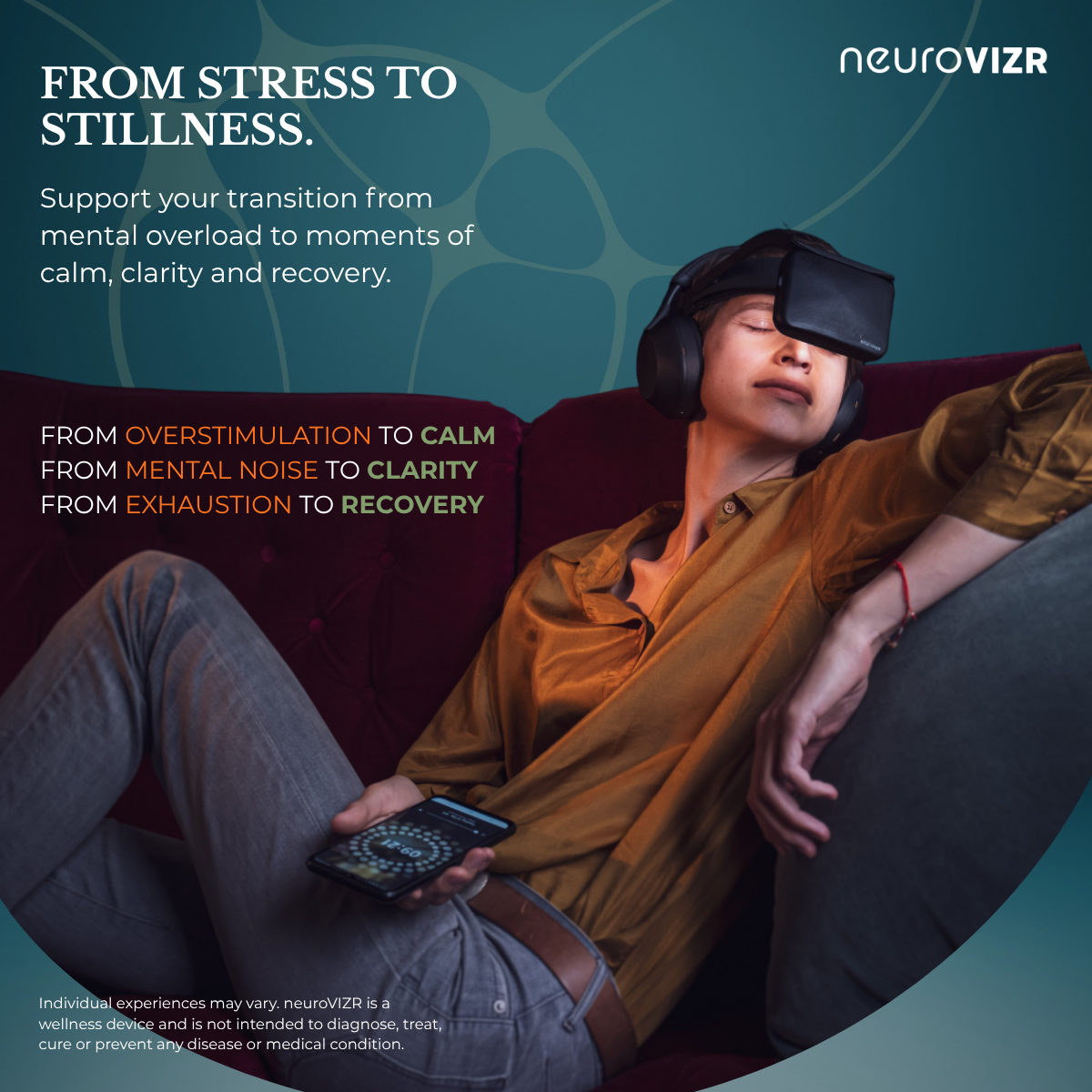
Enhance Your Mental Clarity With neuroVIZR