

Die Wissenschaft

hinter neuroVIZR
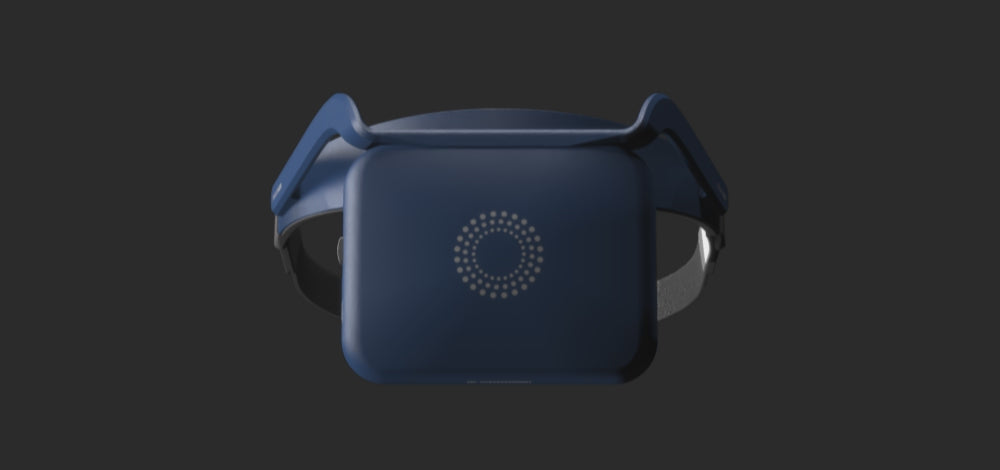
Inspiriert by Wissenschaft
Durch die Auswertung und eigene Tests von Daten haben wir ein Gerät entwickelt, das Licht- und Klangerlebnisse zu einem ganzheitlichen sensorischen Ansatz verbindet.
neuroVIZR ist von wissenschaftlichen Erkenntnissen und realem Nutzerfeedback inspiriert und steht für eine neue Generation von Technologien, die darauf ausgelegt sind, entspannende und angenehme Erlebnisse zu ermöglichen
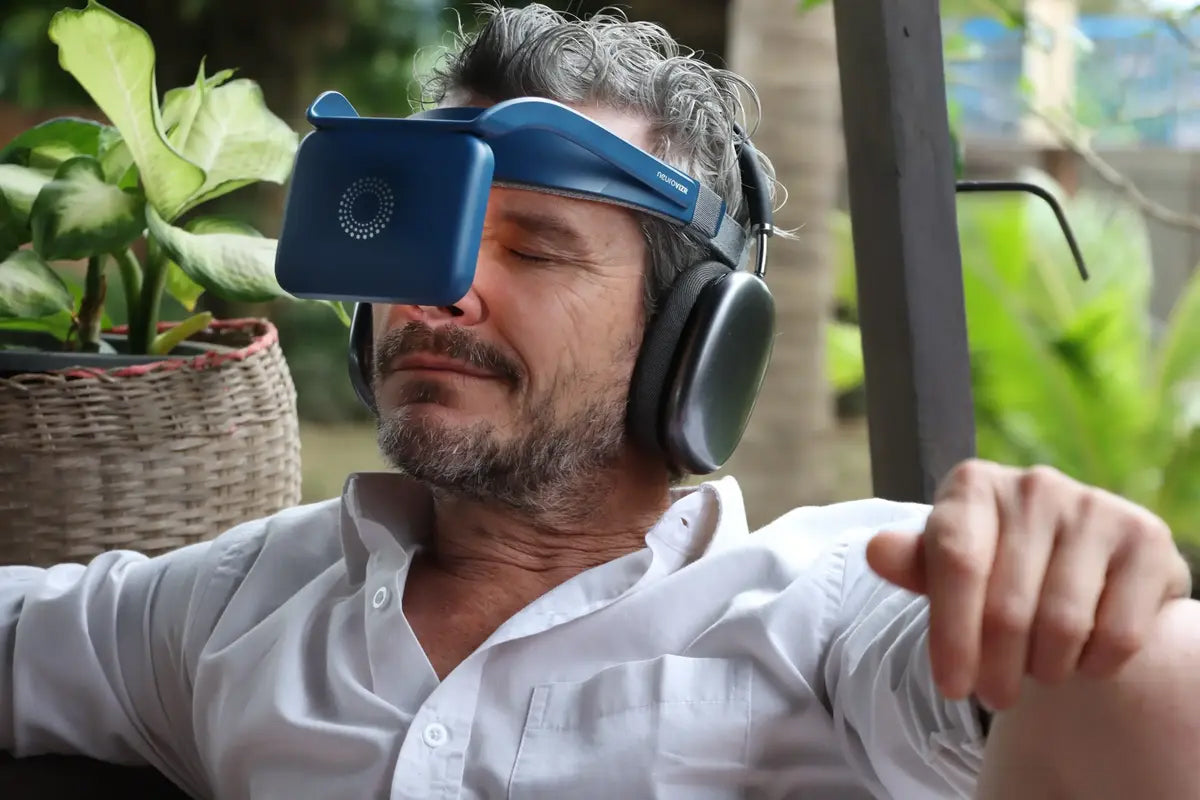
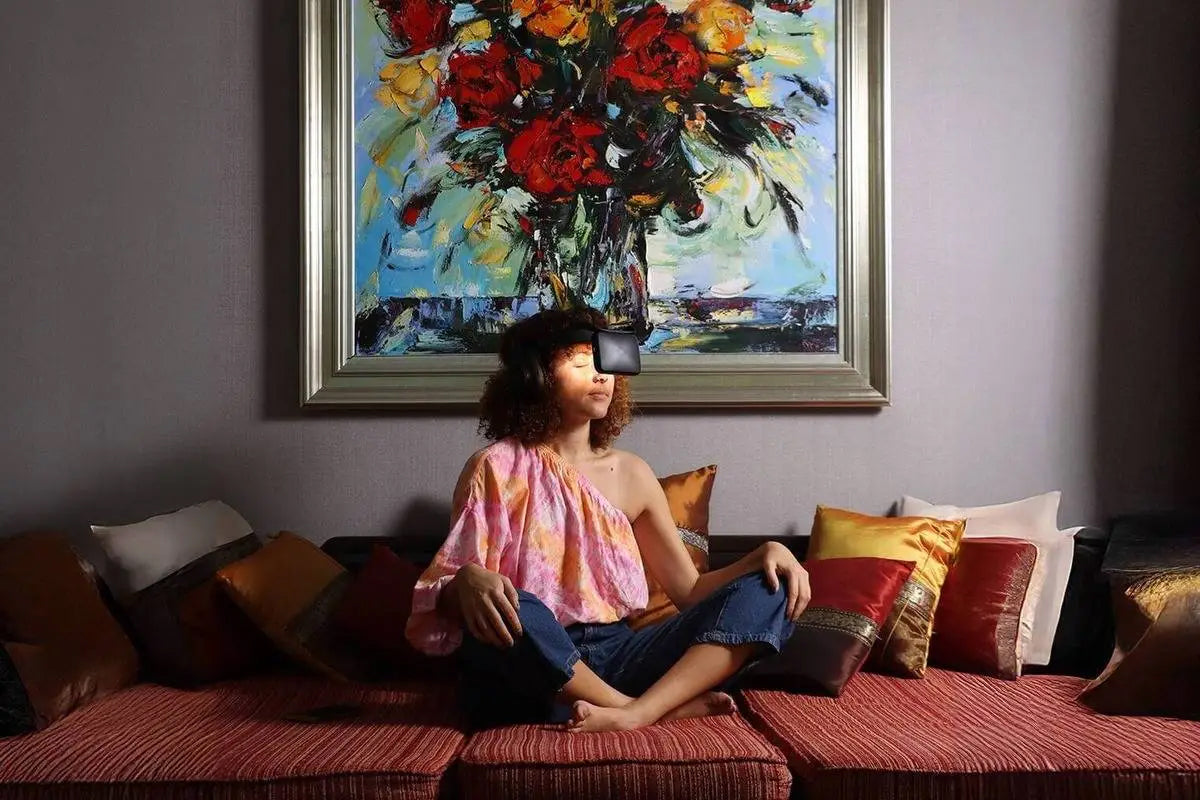
Feel First. Science Second.
Das Konzept hinter neuroVIZR ist von verschiedenen Traditionen inspiriert, die sich mit der Wirkung von Licht, Klang und menschlicher Wahrnehmung beschäftigen.
neuroVIZR nutzt synchronisierte Licht- und Klangerlebnisse, die entwickelt wurden, um unterschiedliche Gehirnzustände zu unterstützen – beispielsweise solche, die mit Entspannung, Fokus oder Schlafvorbereitung in Verbindung gebracht werden.
Viele Nutzer beschreiben die Erfahrung als:
- tief entspannend
- meditativ
- immersiv
- überraschend beruhigend
In den letzten Jahrzehnten haben Forschende in Neurowissenschaften und Wahrnehmungsforschung untersucht, wie rhythmische Licht- und Klangumgebungen Aufmerksamkeit, Wahrnehmung und Entspannungserlebnisse beeinflussen können.
Das wissenschaftliche Interesse an der Beziehung zwischen Licht, Klang und dem menschlichen Erleben reicht viele Jahrzehnte zurück und entwickelt sich mit neuen Studien kontinuierlich weiter.
Im Folgenden finden Sie eine Auswahl an Forschungsarbeiten und Veröffentlichungen zu diesen Themen.
Wissenschaftlicher Hintergrund
Die Forschung im Bereich der audiovisuellen Stimulation (AVE) untersucht seit mehreren Jahrzehnten, wie rhythmische Licht- und Klangmuster Wahrnehmung und mentale Zustände beeinflussen können.
Solche sensorischen Technologien werden häufig im Zusammenhang mit Entspannung, Meditation, mentalem Training und kognitiver Leistungsfähigkeit erforscht.
AVE-Systeme arbeiten mit rhythmischen visuellen und akustischen Reizen, die das Gehirn dazu einladen können, sich mit externen Mustern zu synchronisieren. Viele Nutzer berichten von Erfahrungen wie:
• tiefer Entspannung
• verbessertem Fokus
• klarerer mentaler Wahrnehmung
• einem Gefühl mentaler Erholung nach intensiven Tagen
Neben subjektiven Nutzererfahrungen werden AVE-Technologien in verschiedenen wissenschaftlichen und experimentellen Kontexten untersucht, die sich mit Aufmerksamkeit, Wahrnehmung und Bewusstseinszuständen beschäftigen.
neuroVIZR baut auf diesen Prinzipien auf und kombiniert präzise abgestimmte Lichtfrequenzen mit immersiven Klanglandschaften, um ein geführtes Entspannungserlebnis zu schaffen.

Unterstützt Entspannung in wenigen Minuten.
Im Jahr 2023 veröffentlichte VIZR Technologies, der Hersteller von neuroVIZR, eine Beobachtungsstudie zu Nutzererfahrungen. Die Teilnehmer berichteten bereits nach kurzen Licht- und Klangsessions von mehr Entspannung, reduziertem Stress und verbessertem Fokus.
Im Jahr 2023 veröffentlichte VIZR Technologies, der Hersteller von neuroVIZR, eine Beobachtungsstudie zu Nutzererfahrungen. Die Teilnehmer berichteten bereits nach kurzen Licht- und Klangsessions von mehr Entspannung, reduziertem Stress und verbessertem Fokus.

Kognitive Leistungsfähigkeit & Gehirnforschung
Forscher am MIT untersuchen, wie rhythmische sensorische Stimulation bei 40-Hz-Gammafrequenzen mit Gehirnaktivität in Bereichen zusammenhängen kann, die mit Aufmerksamkeit und Gedächtnis in Verbindung stehen.
Diese Forschung zeigt das wachsende wissenschaftliche Interesse an nicht-invasiver sensorischer Stimulation durch Licht und Klang und daran, wie rhythmische Muster Wahrnehmung und mentale Zustände beeinflussen können.
Technologien wie neuroVIZR lassen sich von diesen neurowissenschaftlichen Forschungsfeldern inspirieren und schaffen immersive Licht- und Klang-Erlebnisse, die Fokus, Entspannung und Achtsamkeit unterstützen können.ützen.
Entdecken Sie den Durchbruch des MIT
Forscher am MIT untersuchen, wie rhythmische sensorische Stimulation bei 40-Hz-Gammafrequenzen mit Gehirnaktivität in Bereichen zusammenhängen kann, die mit Aufmerksamkeit und Gedächtnis in Verbindung stehen.
Diese Forschung zeigt das wachsende wissenschaftliche Interesse an nicht-invasiver sensorischer Stimulation durch Licht und Klang und daran, wie rhythmische Muster Wahrnehmung und mentale Zustände beeinflussen können.
Technologien wie neuroVIZR lassen sich von diesen neurowissenschaftlichen Forschungsfeldern inspirieren und schaffen immersive Licht- und Klang-Erlebnisse, die Fokus, Entspannung und Achtsamkeit unterstützen können.ützen.
Entdecken Sie den Durchbruch des MIT

Neue Erkenntnisse zu Gehirnrhythmen
Forscher am MIT untersuchen, wie rhythmische sensorische Stimulation bei 40-Hz-Gammafrequenzen mit natürlichen Gehirnrhythmen interagieren kann.
In Laborstudien konnten Wissenschaftler beobachten, dass bestimmte Licht- und Klangmuster die Gehirnaktivität beeinflussen und mit Prozessen in Verbindung stehen können, die an den natürlichen Erhaltungsmechanismen des Gehirns beteiligt sind.
Dieses aufkommende Forschungsfeld untersucht, wie rhythmische sensorische Stimulation Wahrnehmung, Aufmerksamkeit und Bewusstseinszustände beeinflussen kann.
Technologien wie neuroVIZR lassen sich von diesen Forschungsansätzen inspirieren und schaffen immersive Licht- und Klang-Erlebnisse, die Entspannung, Fokus und Achtsamkeit unterstützen können.
Sehen Sie, wie sich das Gehirn reinigt – hier nachlesen
Forscher am MIT untersuchen, wie rhythmische sensorische Stimulation bei 40-Hz-Gammafrequenzen mit natürlichen Gehirnrhythmen interagieren kann.
In Laborstudien konnten Wissenschaftler beobachten, dass bestimmte Licht- und Klangmuster die Gehirnaktivität beeinflussen und mit Prozessen in Verbindung stehen können, die an den natürlichen Erhaltungsmechanismen des Gehirns beteiligt sind.
Dieses aufkommende Forschungsfeld untersucht, wie rhythmische sensorische Stimulation Wahrnehmung, Aufmerksamkeit und Bewusstseinszustände beeinflussen kann.
Technologien wie neuroVIZR lassen sich von diesen Forschungsansätzen inspirieren und schaffen immersive Licht- und Klang-Erlebnisse, die Entspannung, Fokus und Achtsamkeit unterstützen können.
Sehen Sie, wie sich das Gehirn reinigt – hier nachlesen
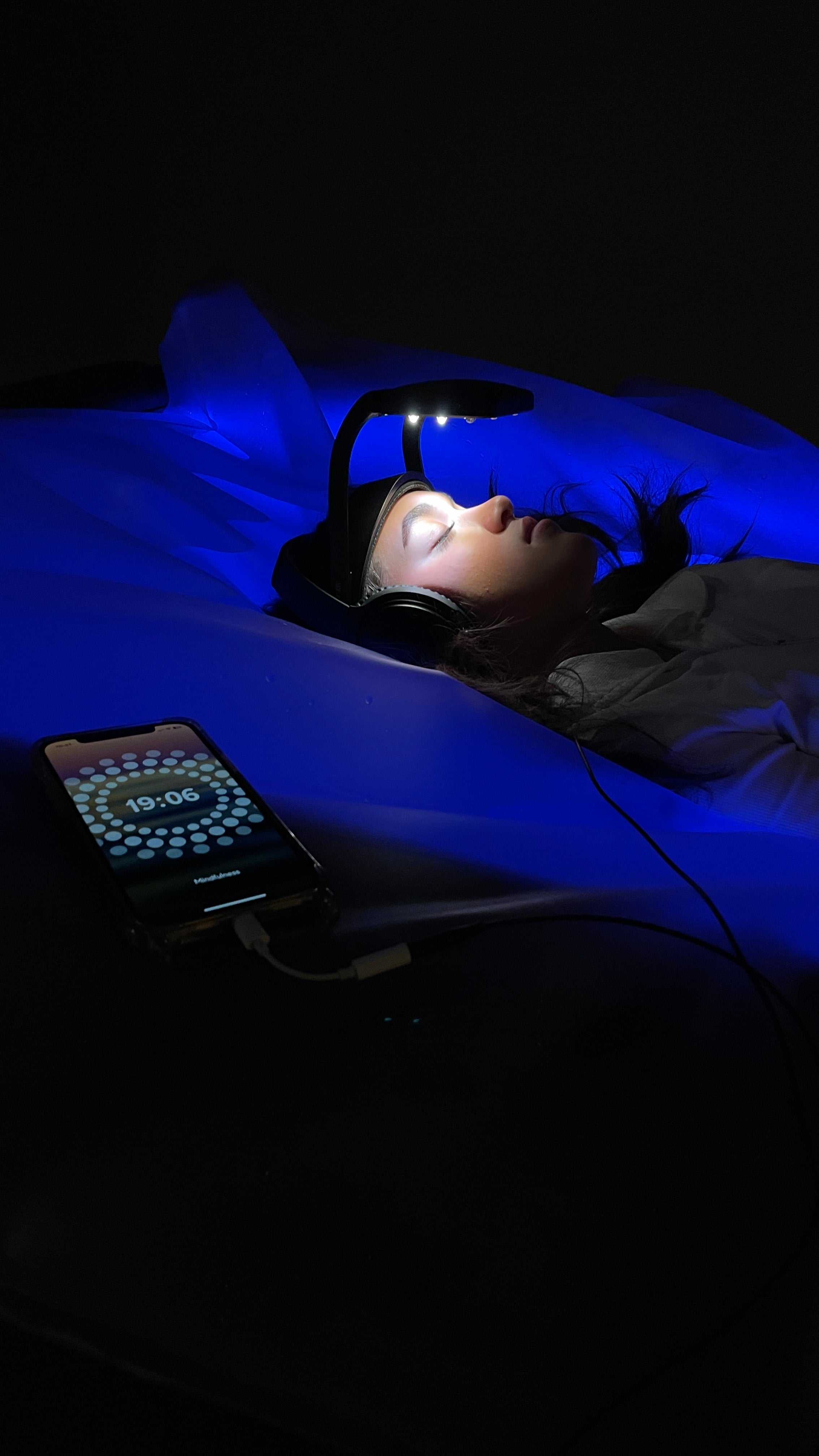
Forschung zu Gehirnsynchronität
In einer EEG-Studie aus dem Jahr 2024 an der Latvian Academy of Music untersuchten Forscher, wie strukturierte audiovisuelle Stimulation Aktivitätsmuster des Gehirns während kreativer Zusammenarbeit beeinflussen kann.
Die Studie beobachtete Veränderungen in der Komplexität von Gehirnsignalen sowie Momente der Synchronität zwischen Teilnehmern bei gemeinsamen kreativen Aufgaben.
Diese Ergebnisse tragen zu einem wachsenden Forschungsfeld bei, das untersucht, wie rhythmische Licht- und Klangstimulation mit Aufmerksamkeit, Wahrnehmung und kreativer Aktivität zusammenhängen kann.
Technologien wie neuroVIZR lassen sich von diesen Forschungsfeldern inspirieren und schaffen immersive Licht- und Klang-Erlebnisse, die Entspannung, Fokus und Achtsamkeit unterstützen können.
Erfahren Sie, wie ein gemeinsamer Rhythmus die Gehirnverbindungen prägt
In einer EEG-Studie aus dem Jahr 2024 an der Latvian Academy of Music untersuchten Forscher, wie strukturierte audiovisuelle Stimulation Aktivitätsmuster des Gehirns während kreativer Zusammenarbeit beeinflussen kann.
Die Studie beobachtete Veränderungen in der Komplexität von Gehirnsignalen sowie Momente der Synchronität zwischen Teilnehmern bei gemeinsamen kreativen Aufgaben.
Diese Ergebnisse tragen zu einem wachsenden Forschungsfeld bei, das untersucht, wie rhythmische Licht- und Klangstimulation mit Aufmerksamkeit, Wahrnehmung und kreativer Aktivität zusammenhängen kann.
Technologien wie neuroVIZR lassen sich von diesen Forschungsfeldern inspirieren und schaffen immersive Licht- und Klang-Erlebnisse, die Entspannung, Fokus und Achtsamkeit unterstützen können.
Erfahren Sie, wie ein gemeinsamer Rhythmus die Gehirnverbindungen prägt
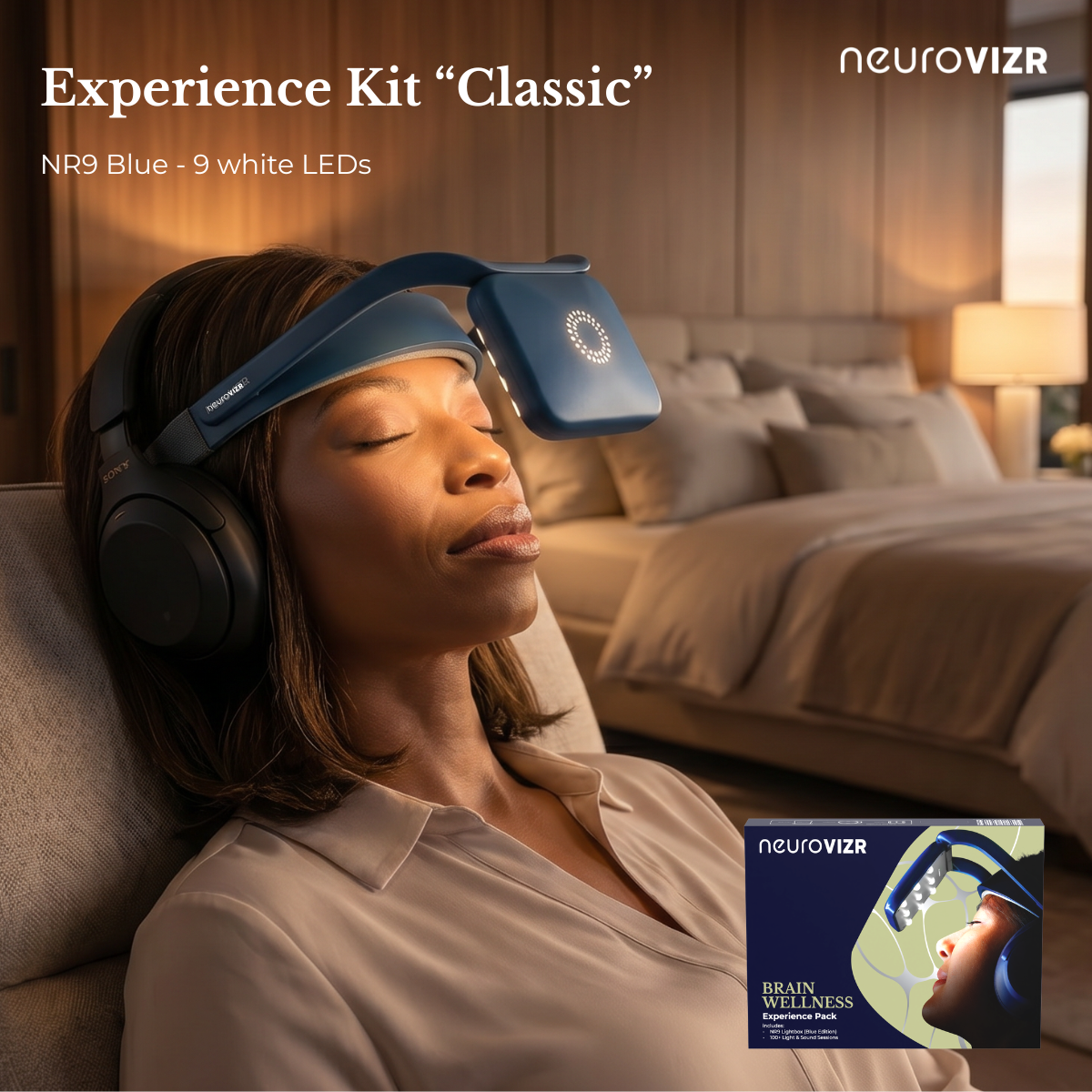
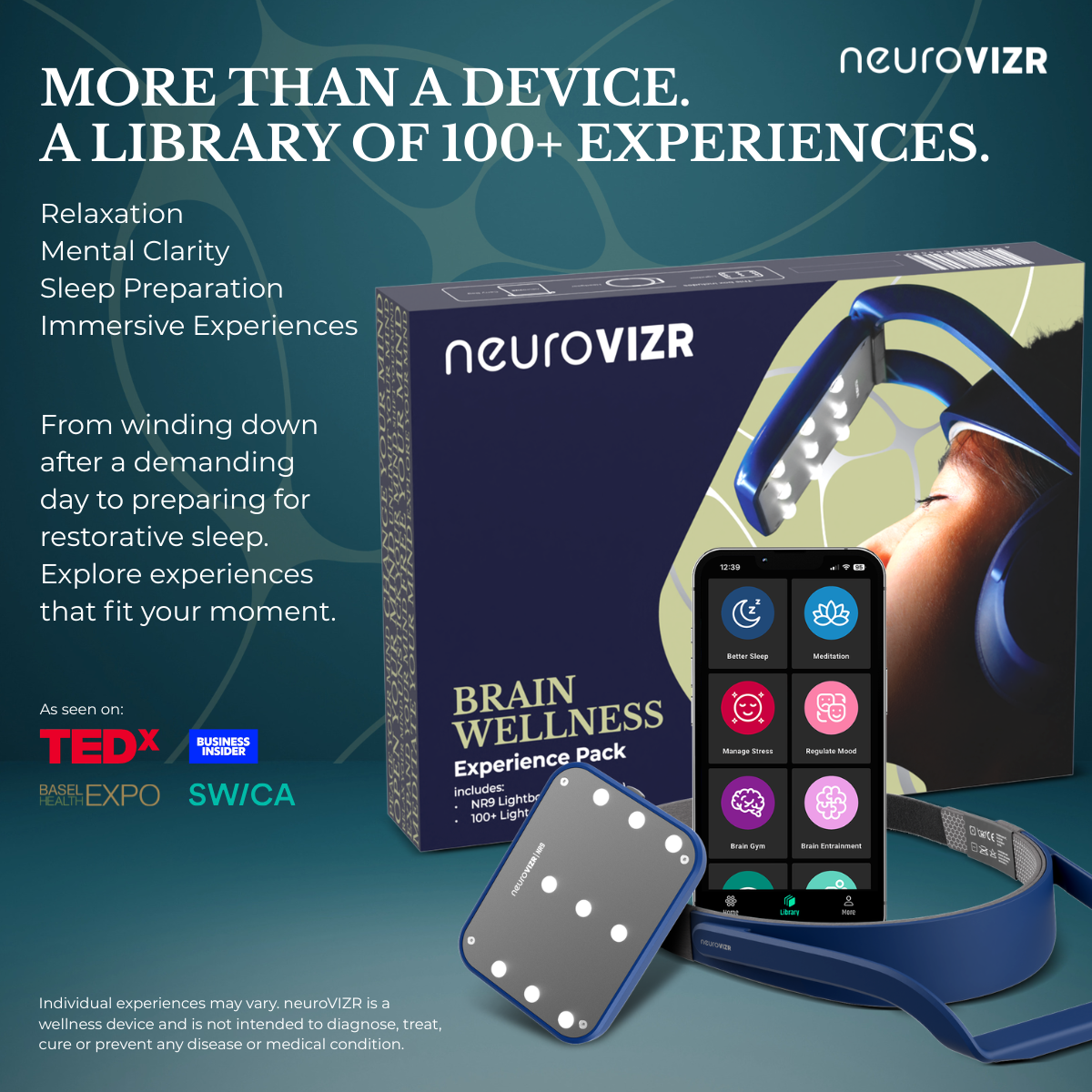
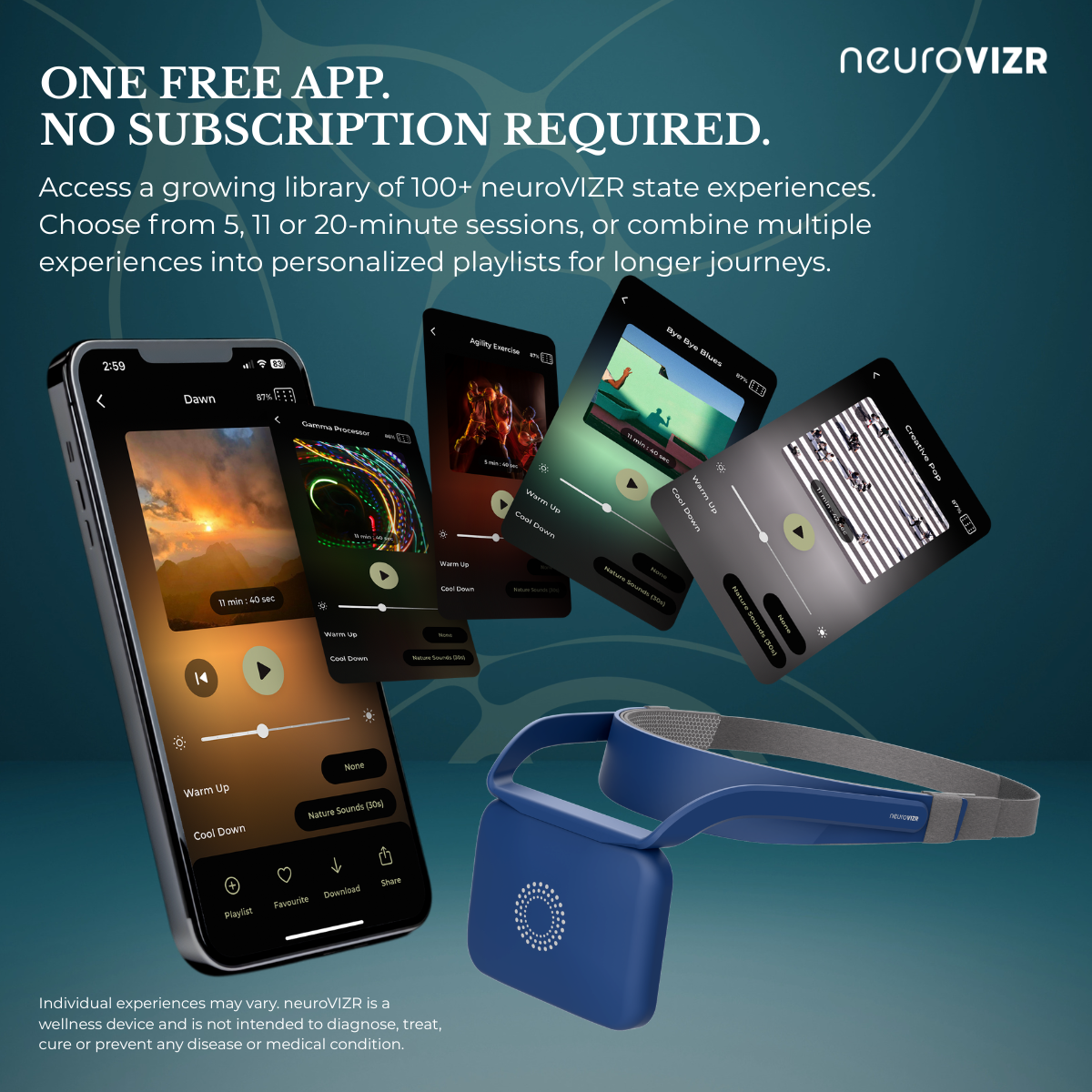
Choose the neuroVIZR experience that fits you best.
We offer neuroVIZR in two versions - with white LEDs or red LEDs: Both versions provide access to the same neuroVIZR app and session library.
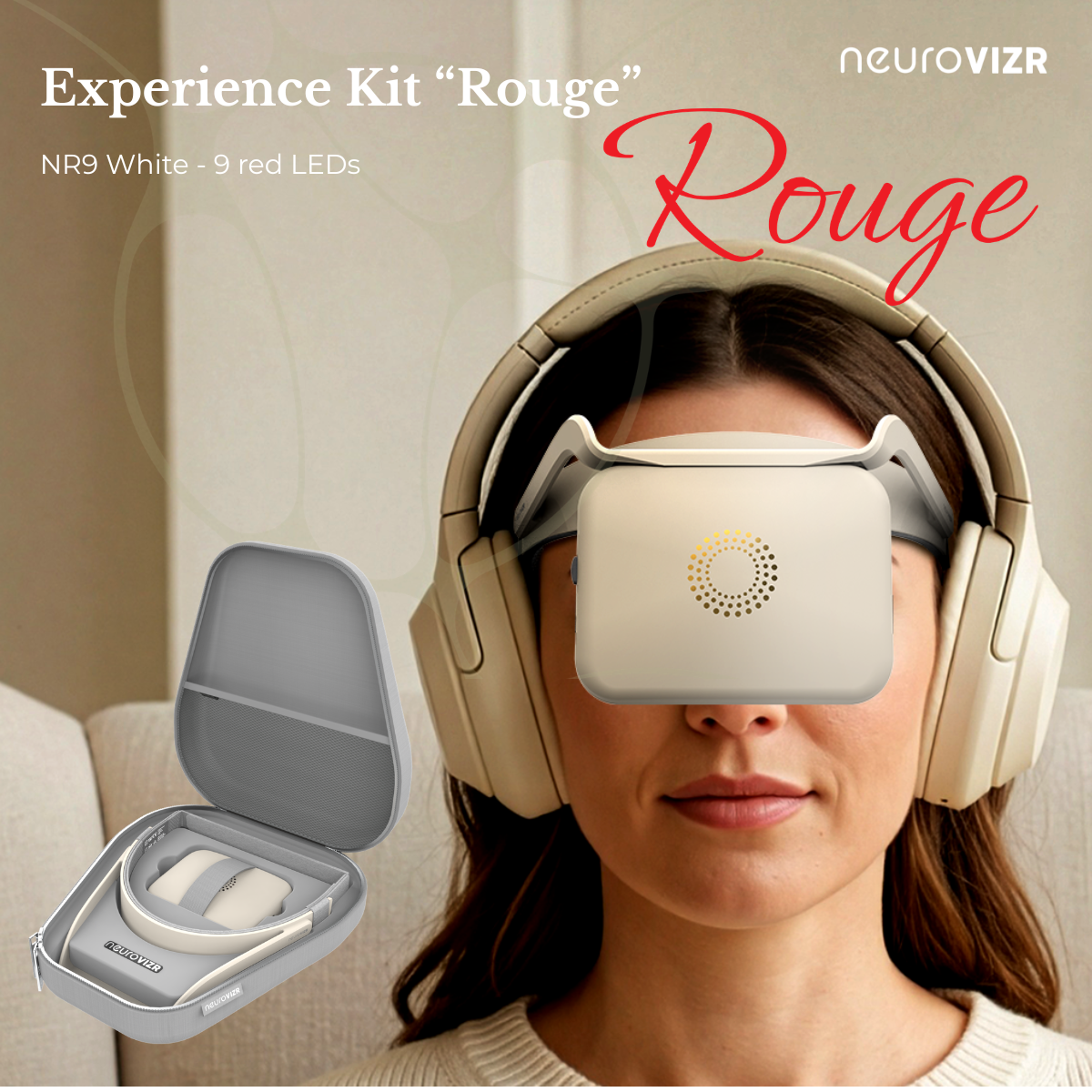
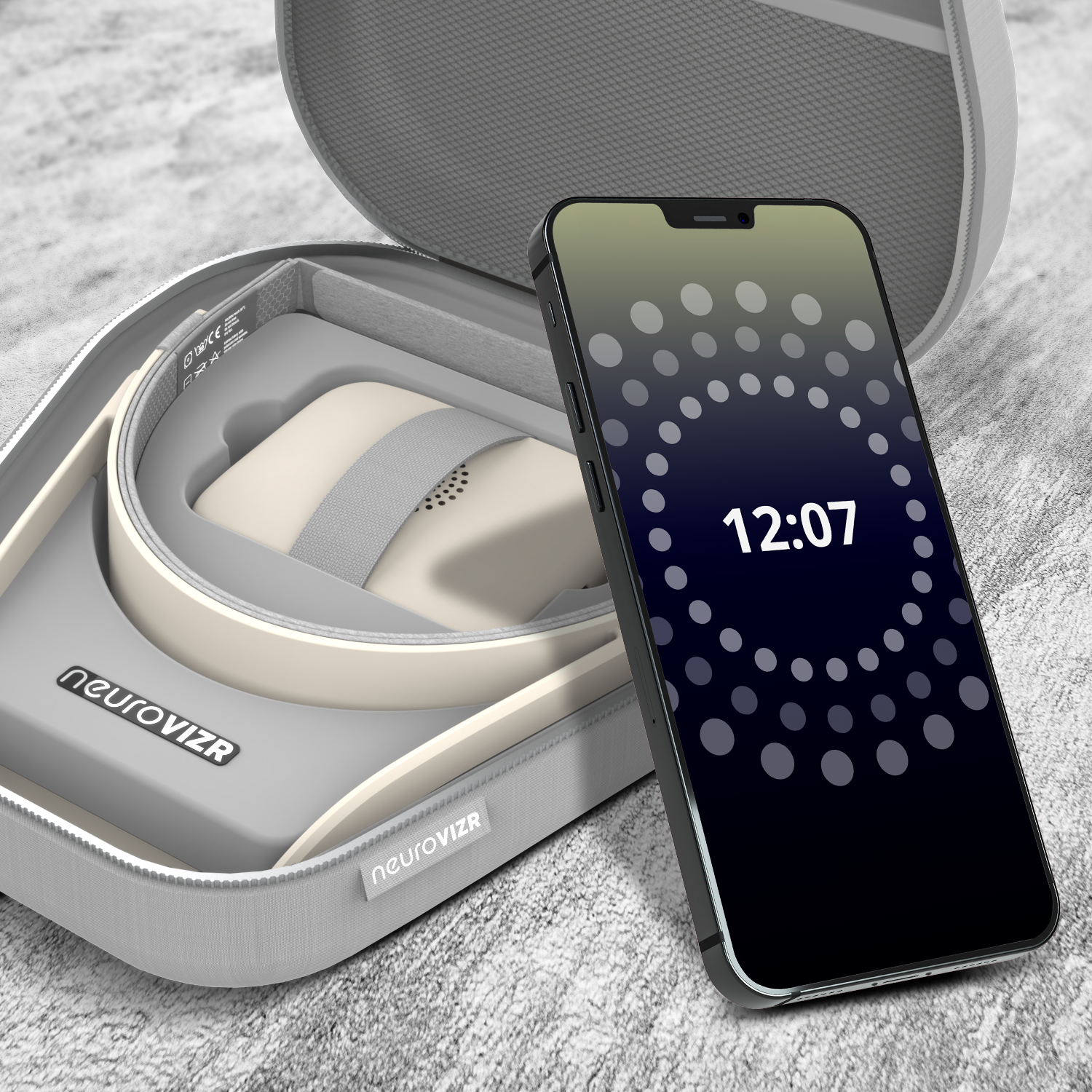
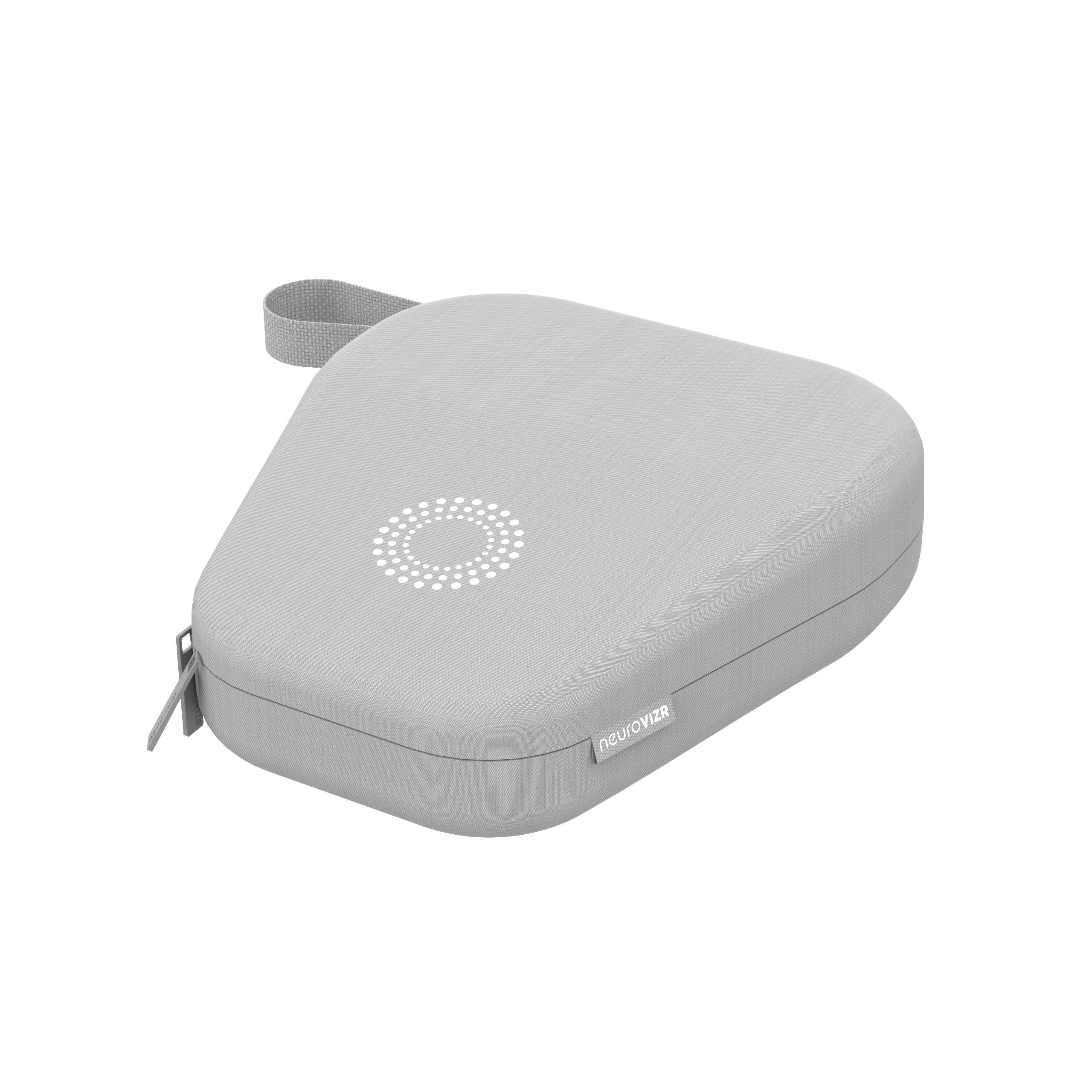
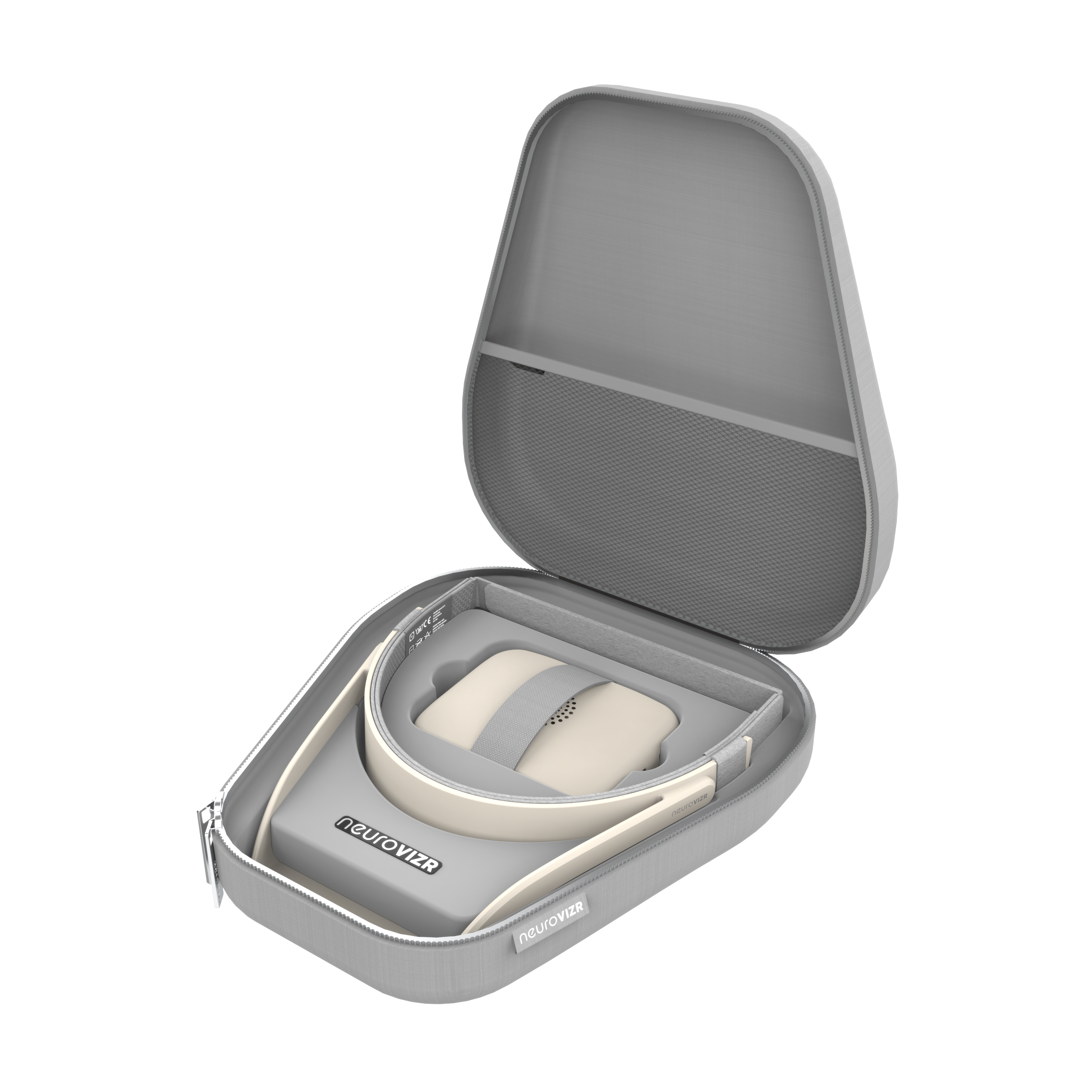
neuroVIZR Experience Kit "Rouge" (Rotlicht)