


Brain fog isn't a diagnosis, it's a familiar feeling: your mind feels slow, cloudy or "not quite there." You reach for a word and it's gone; focus slips; simple tasks feel heavy. Most of the time it's your brain telling you it's overloaded, under-rested or running on too much stress.
The good news: brain fog usually lifts when you address what's driving it. Here's what causes that cloudy feeling and eight simple ways to clear it.
What is brain fog?
Brain fog describes temporary trouble with focus, memory and mental clarity. It's a subjective experience rather than a medical condition, but it's a useful signal that something in your routine needs attention.
Common causes of brain fog
- Poor or irregular sleep, the most common trigger
- Ongoing stress, a "wired but tired" mind struggles to focus
- Dehydration or skipped meals, the brain runs on steady fuel
- Too much stimulation, endless screens and notifications
- Too little movement or daylight
What brain fog can feel like
- A slow, heavy or "disconnected" feeling
- Losing your train of thought mid-sentence
- Rereading the same line without it landing
- Mental fatigue that sleep alone doesn't fully fix
8 ways to clear brain fog naturally
1. Protect your sleep
Consistent, sufficient sleep is the single biggest lever for mental clarity.
2. Take real breaks
Short breaks away from screens let your attention recover instead of grinding down.
3. Move your body
Even a short walk boosts blood flow and can lift the cloudy feeling.
4. Hydrate and eat steadily
Water and balanced meals keep your brain's energy supply stable.
5. Get morning daylight
Light early in the day supports focus and a healthier sleep rhythm.
6. Calm the stress response
Slow breathing with a longer exhale helps a "wired" mind settle so it can focus.
7. Single-task
Doing one thing at a time reduces the mental switching cost that feeds fog.
8. Build a wind-down routine
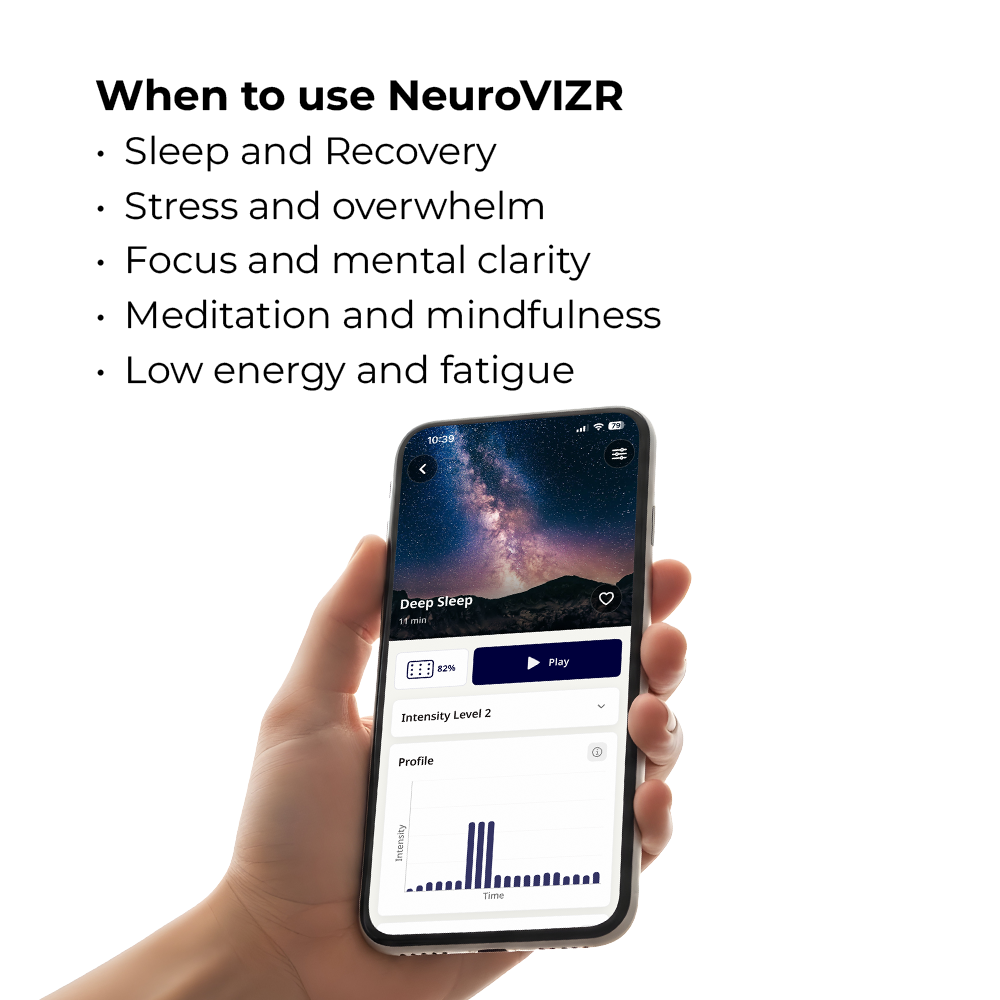
Structured light and sound cues, for example with a wellness device like neuroVIZR, create a calming setting many people use to reset and refocus as part of a regular routine.
When to check in with a professional
Occasional brain fog is normal. If it's persistent, worsening or affecting daily life, it's worth speaking with a qualified professional to rule out underlying causes.
Frequently asked questions
How do I get rid of brain fog fast?
A glass of water, a short walk in daylight and a few slow breaths are quick resets that often help in the moment.
Can stress cause brain fog?
Yes, ongoing stress is one of the most common contributors to a cloudy, unfocused feeling.
Does poor sleep cause brain fog?
Very often. Insufficient or irregular sleep is the number-one driver of reduced mental clarity.













Share:
How to Lower Cortisol Naturally: 10 Science-Backed Ways
How to Lower Cortisol Naturally: 10 Science-Backed Ways