

Haftungsausschluss
Dieser Inhalt dient ausschließlich Bildungs- und Informationszwecken.
Er stellt keine medizinische Beratung, Diagnose oder Behandlung dar und ist kein Ersatz für professionelle Gesundheitsberatung.
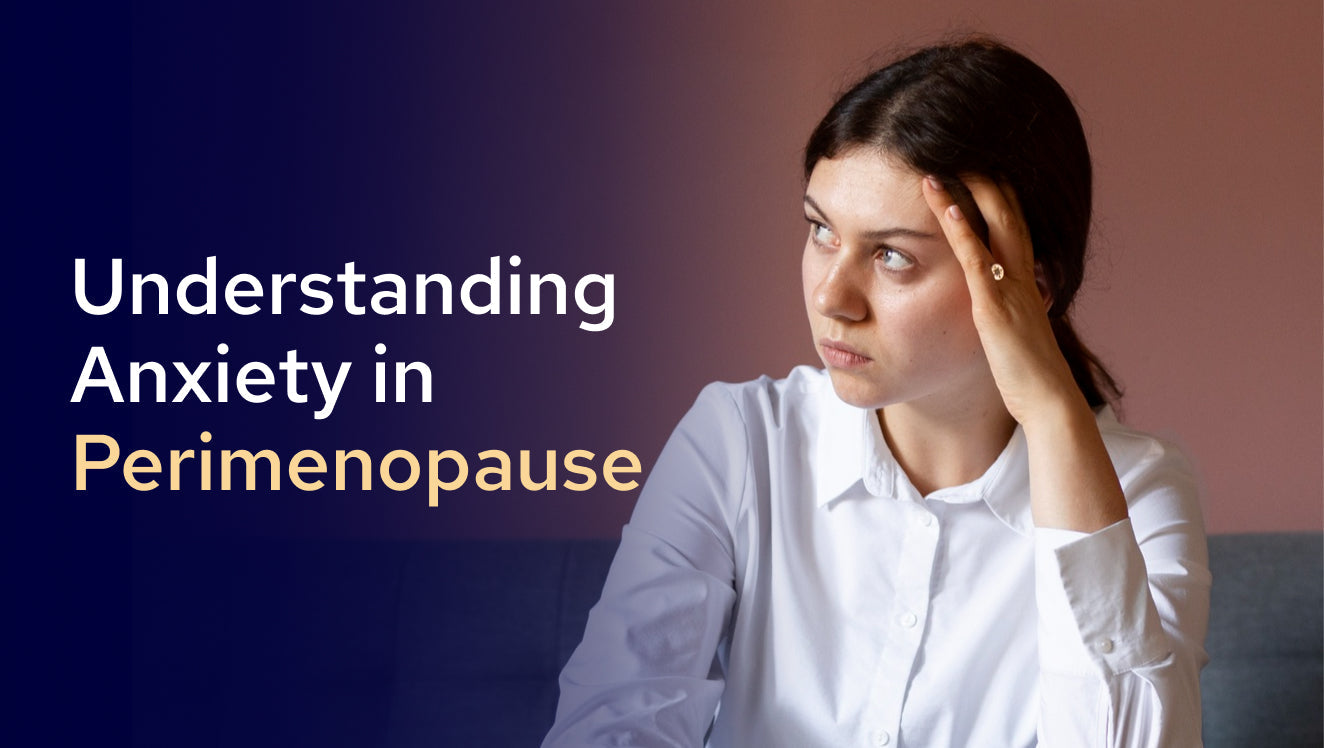
Die Perimenopause ist für viele Frauen eine Quelle der Angst, etwas, das sie noch nie zuvor erlebt haben.
Nicht situationsbedingt. Nicht klar mit Stress verbunden. Es kann völlig unerwartet auftreten: Da kommt ein Engegefühl in der Brust, die Gedanken rasen, man spürt, dass etwas nicht stimmt, aber es scheint nicht man selbst zu sein.
Besonders beunruhigend daran ist jedoch die Frage hinter dieser Frage:
„Warum fühle ich mich jetzt so?“
Wenn Sie sich selbst noch nie als ängstliche Person betrachtet haben, kann die Situation entmutigend (sogar beängstigend) sein. Aber das ist nicht der Grund, warum es nicht funktioniert und das ist nicht Ihr Kopf, der kaputt geht. Was wahrscheinlicher ist, ist eine sanftere und kompliziertere Form der Anpassung: Ihr Gehirn durchläuft eine bedeutende biologische Veränderung.
Lesen Sie mehr - PMDS und Perimenopause
Warum die Perimenopause Angst auslösen kann.
Es ist nicht nur eine hormonelle Veränderung, sondern eine neurologische, bekannt als Perimenopause.
Östrogen hat starke Auswirkungen auf das Gehirn, obwohl es nur im reproduktiven Kontext erwähnt wird. Es unterstützt die Regulierung von Neurotransmittern wie Serotonin und GABA, die emotionale Pufferung und die Wahrnehmung von Bedrohung und Sicherheit im Gehirn.
Aufgrund von Östrogenveränderungen in der Perimenopause kann das innere Gleichgewicht des Gehirns weniger vorhersehbar werden. Systeme, die zuvor auf synergetische Weise Stimmung, Stressreaktion, Schlaf und emotionale Widerstandsfähigkeit regulierten, könnten etwas weniger koordiniert werden.
Dies kann zu Folgendem führen:
-
Überempfindlichkeit der Amygdala, dem Bedrohungserkennungszentrum des Gehirns.
-
Dem Nervensystem werden die Neurotransmitter, die das Nervensystem normalerweise entspannen, indem sie Signale senden, die reduziert werden.
-
Eine schnellere und längere Reaktion auf Stress.
Das Ergebnis ist kein Zustand ständiger Panik; es ist normalerweise ein Hintergrundrauschen von Angst, Aufmerksamkeit oder Unruhe, das neu und schwer zu beschreiben ist.
Warum diese Angst so beunruhigend ist
Das Gefühl selbst ist nicht der einzige schwierigste Aspekt der perimenopausenbedingten Angst, aber der Verlust der Selbsterkenntnis ist ebenfalls äußerst herausfordernd.
Sie sagen vielleicht zu sich selbst:
-
So etwas ist mir nicht neu. Und warum sollte es jetzt so überwältigend wirken?
-
Warum passiert das mit meinem Körper, bevor mein Kopf überhaupt mithalten kann?
-
Warum kann ich mich nicht mehr so entspannen wie früher?
Das ist neurowissenschaftlich nachvollziehbar. Vorhersehbarkeit ist ein sehr wichtiger Aspekt für das Gehirn, um sich sicher zu fühlen. Interne Signale werden in der Perimenopause weniger vorhersehbar, der Schlaf kann gestört werden, Emotionen können sich ändern, die Stresstoleranz kann abnehmen.
Wenn das Gehirn nicht in der Lage ist, das nächste Ereignis vorherzusagen, neigt es dazu, dies als Gefahr zu betrachten. In dieser Hinsicht ist Angst keine Schwäche, sondern eine Schutzreaktion auf Veränderung.
Dies ist keine Störung, sondern ein Übergangszustand.
Obwohl es leicht ist, die in der Perimenopause erlebte Angst als Störung zu betrachten, ist dies nicht immer der Fall.
Angst wächst bei vielen Frauen nicht plötzlich. Vielmehr reagieren sie auf:
-
Hormonelle Schwankungen
-
Abgeschwächte emotionale Pufferung.
-
Zunahme der kognitiven und sensorischen Empfindlichkeit.
In dieser Perspektive ist Angst kein Ende, sondern ein Symptom. Ein Hinweis darauf, dass das Gehirn mehr Stabilität, Rhythmus und Beruhigung benötigt, als es bisher erforderlich war.
Dies ist die einzige Möglichkeit, wie Angst durch Umdeutung gemildert werden kann. Sobald man Angst als eine Form der Kommunikation und nicht als eine Fehlfunktion wahrnimmt, beginnt ein Wandel in der Einstellung dazu.
Das Gehirn während dieses Übergangs unterstützen
Da diese Angst in neurobiologischen Veränderungen begründet ist, funktioniert Unterstützung am besten, wenn sie sich auf Regulierung und nicht auf Kontrolle konzentriert.
Hilfreiche Ansätze umfassen oft:
-
Schaffung vorhersehbarer Rhythmen rund um Schlaf, Lichteinfall und tägliche Routinen
-
Reduzierung kognitiver Überlastung und Multitasking, wann immer möglich
-
Dem Nervensystem wiederholte Sicherheitssignale zu geben, anstatt durch Unbehagen zu gehen
Praktiken, die die Sinne ansprechen – Geräusche, Licht, Atem, sanfte Bewegung – können dem Gehirn helfen, sich wieder auf Stabilität einzustellen. Diese Inputs erzwingen keine Ruhe; sie laden sie ein.
Am wichtigsten ist Beständigkeit. Das Nervensystem lernt durch Wiederholung, nicht durch Druck.
Die Beziehung zur Angst verändern
Eine der bedeutsamsten Veränderungen in dieser Phase ist es, zu lernen, anders mit Angst umzugehen.
Anstatt zu fragen: „Wie werde ich das los?“
Könnte eine unterstützendere Frage lauten:
„Was braucht mein Gehirn gerade?“
Manchmal ist die Antwort Ruhe.
Manchmal ist es Beruhigung.
Manchmal ist es einfach das Verständnis, dass nichts „falsch“ ist.
Wenn Angst mit Neugier statt mit Furcht begegnet wird, verliert sie oft etwas von ihrer Intensität. Nicht weil sie verschwindet, sondern weil sich das Nervensystem nicht mehr allein damit fühlt.
Eine sanfte Umdeutung
Die Perimenopause ist eine Zeit der tiefgreifenden Neukalibrierung. Ihr Gehirn passt sich neuen inneren Bedingungen an, lernt neue Rhythmen und verhandelt das Gleichgewicht neu.
Bei neuroVIZR begegnen wir Erfahrungen wie der Perimenopause-Angst mit einer gehirnzentrierten, mitfühlenden Herangehensweise, die sich darauf konzentriert, zu verstehen, wie das Nervensystem auf Veränderungen reagiert und wie unterstützende Inputs dazu beitragen können, ein Gefühl der inneren Sicherheit wiederherzustellen.
Es geht nicht darum, sich selbst zu reparieren.
Es geht darum, zu lernen, wie man sein Gehirn bei der Anpassung unterstützt.
FAQs
1. Kann die Perimenopause wirklich Angst verursachen, auch wenn ich sie vorher noch nie hatte?
Ja. Viele Frauen erleben Angst zum ersten Mal in der Perimenopause aufgrund hormoneller Schwankungen, die beeinflussen, wie das Gehirn Stress, Emotionen und Sicherheit verarbeitet.
2. Warum fühlt sich diese Angst plötzlich oder unverhältnismäßig an?
Während der Perimenopause können die Bedrohungserkennungssysteme des Gehirns empfindlicher werden, wodurch alltägliche Stressoren intensiver oder schwerer zu regulieren sind.
3. Ist Perimenopause-Angst eine psychische Störung?
Nicht immer. In vielen Fällen spiegelt sie eine vorübergehende Reaktion des Nervensystems auf hormonelle und neurologische Veränderungen wider und keine lebenslange Angststörung.
4. Warum reagiert mein Körper, bevor meine Gedanken es tun?
Angst beginnt oft im Nervensystem, nicht im bewussten Geist. Körperliche Empfindungen können auftreten, bevor Sie Zeit haben, logisch zu beurteilen, was geschieht.
Inhaltsreferenz
-
National Institutes of Health (NIH)
-
The North American Menopause Society (NAMS)
-
Harvard Medical School
-
Mayo Clinic
-
Frontiers in Neuroscience












Teilen:
Wie man einen überaktiven Geist beruhigt (ohne gegen die eigenen Gedanken anzukämpfen)
Kann die Menstruation Kopfschmerzen verursachen?